
Meet Trudy Wright, Executive Coach for Guildhall Ignite

In the Spotlight: Trudy Wright
Guildhall Ignite is the executive and professional training consultancy of Guildhall School, enabling performance by coaching in and through the performing arts. Guildhall Ignite combines accredited business and executive coaching with the School’s world-class performing arts offer, using specialist coaches to deliver outstanding professional performance training to managers, leaders, teams and organisations.
Discover more about executive coaching from Guildhall Ignite
At Guildhall Ignite, we have over 40 Coaches with different approaches and specialisms to suit every client or organisation. We took some time out to meet one of them - Executive Coach, Trudy Wright.
How did you become a Coach?
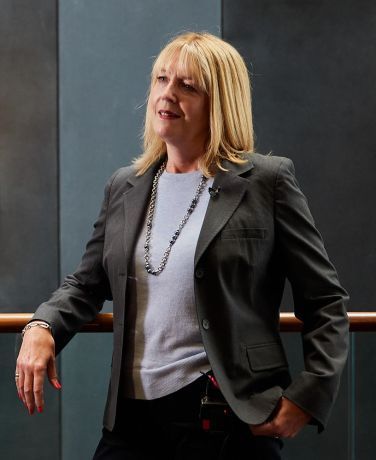
I trained as a pianist and flautist despite never really enjoying performing! But I LOVED music and knew I wanted a career in music. I began working at a classical music agency the day after I graduated from music college and a few years later ended up at Harrison Parrott where I stayed for over two decades. I was a Board Director, with responsibility for a very busy orchestral touring department. My team and I had the privilege to plan and travel on hundreds of tours all over the world with many extraordinary artists and orchestras. It was a dream job in many respects, but in 2012 I was ready to be more home-based and made the decision to re-train as a coach and start my own coaching business.
Do you have a specialism?
My background has informed who I am as a coach. I have a passion for music and orchestras, along with an entrepreneurial spirit and lots of positive experiences working with and in different cultures all over the world. Having been immersed in the music business for over 30 years (and married to an orchestral musician for almost as long) I understand the demanding world which artists and orchestras navigate. This has inspired one of my areas of work with orchestras and management.
How do you use your creative practice with Guildhall Ignite?
I’m a huge believer in creativity being the gateway to access new thinking and solve problems. I like to work creatively with my clients – be it through language, drawing, movement, imagination or music - as I find this often gets the best results for them.
Tell me about your clients
My clients often come from the arts and education sectors - senior leaders, musicians, headteachers, conductors - and I work with young artists at the beginning of their careers. I also enjoy working with corporate clients who tend to have a different background to my own, but it’s interesting that they often bring issues to coaching which are similar to those I work on with individuals from other sectors. Humans are humans, whatever field they work in!
What challenges do your clients often face today?
- Managing time and priorities.
- Managing working relationships.
- Working within complex, multi-layered systems.
- Feeling stuck within their own role.
What coaching trends are you seeing now that inform your work or that clients should be aware of?
The global “meta-picture” is impacting everyone in different ways, whether it’s the threat of climate change, the uncertainty around AI, a perceived lack of wise global leadership or the continuation of unresolved wars. This potential meltdown of civilisation as we know it is the backdrop to everyone’s day-to-day challenges and difficulties. It’s a lot! There’s an urgent need for human beings to maintain and develop their emotional and relationship systems intelligence as well as their communication skills as we hurtle towards the unknown world of Artificial Superintelligence (ASI).
What advice would you give to someone feeling overwhelmed in their career right now?
Take a breath. Maybe close your eyes and take a few breaths – deep, long breaths. Invite the wisest part of yourself to give you some advice. What would they say to you? You might value writing down (or drawing) all the things which are contributing to your overwhelm. From that, identify one small thing you could change for the better and take action – e.g. delegate a task, share a problem, leave work on time.
Seek out support from your own network – a trusted friend, colleague, family member or mentor – and share your feelings. Take care of yourself as you would a partner or child who you love.
If the situation is something you really want to change, rather than a temporary sense of overwhelm, you might want to work with a coach to explore how to manage the overwhelm and/or look at what else needs to change for you.
What is the most rewarding part of your job?
Building relationships with new people. Seeing my clients achieve their desired outcomes and thriving.
What makes someone a great leader?
Excellent self-awareness and a combination of kindness, courage, integrity and an ability to see the bigger picture. And broad shoulders.
What leadership skills are in most demand right now?
In today’s world, we can only really take our colleagues and teams with us if we earn their trust, take the time to build positive relationships and have integrity in the way we work and connect with everyone. I’d say there is an awareness that enhancing human communication and emotional/relational intelligence are important leadership skills.
What I’d like to see is greater demand from our most senior leaders to invest in their own personal and professional development. Ultimately leadership is about 'self', yet there can be an assumption that, given their seniority and over-committed diaries, there is no need - nor time - for professional development. I’d argue that the most senior leaders are often the people who would benefit most from some honest self-reflection and self-scrutiny. A professionally-qualified executive coach can be a trusted thinking partner for exactly this purpose.
A huge thank you to Trudy for taking the time to speak with us and provide such an interesting insight into the world of executive coaching.

