
In conversation with MA Opera Maker (Composition) student Ariella Stoian
In conversation with MA Opera Makers (Composition) student Ariella Stoian
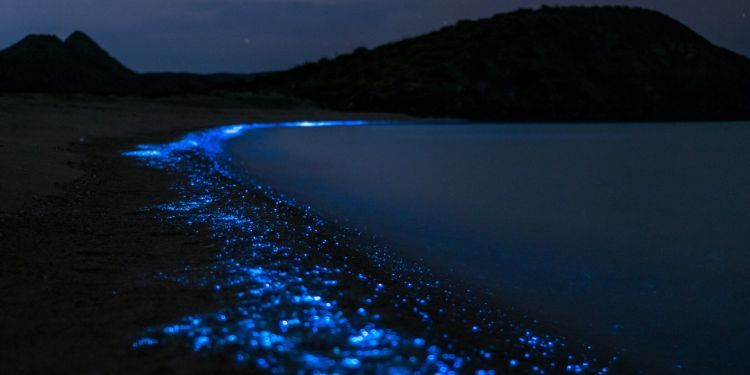
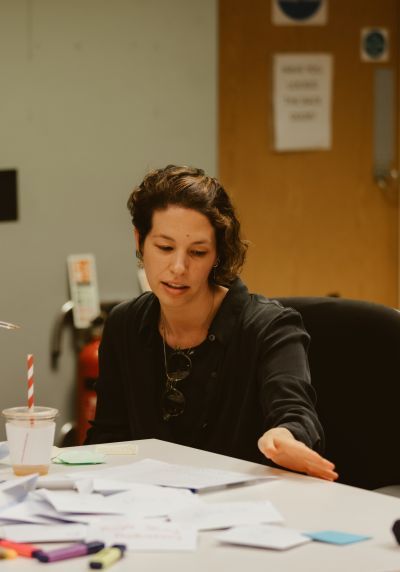
We spoke to Ariella Stoian, an MA in Opera Making & Writing (Composition) student at Guildhall, who recently won the prestigious 2026 Fellini Award in the BlueCat Screenplay Competition for Best International Script. Ariella shares the concept behind Life as a Mesoplankton and their experience of studying at Guildhall.
Congratulations - How did it feel to receive this recognition, and what does the award mean to you at this stage in your career?
Thank you! It’s hugely encouraging and wonderful to feel that this story can reach and move people so widely. Any success means getting to do the thing I love and having more doors open to storytelling. This award is recognition on an international stage and gives me access to further opportunities as a writer, toward a sustainable career across mediums.
How would you describe the heart of this project, and what first inspired you to write it?
Life as a Mesoplankton grew from thinking about children who spend long stretches inside hospitals, for various reasons, and how it changes you to grow up in proximity to death. I wanted to write about two kids who refuse to flatten into tragedy – who argue, joke, obsess over immortal jellyfish, and find each other – and who use science, art, and imagination as a way of living joyfully, often mischievously, while processing the pain of loss that’s implicit in life, with an honesty that eases it.
Grief has magical, transformative properties. In the film, Mab’s (13) father was an artist, and her own drawings come to life to express what she’s feeling, evolving as her friendship with George (10) grows, as she joins his quest to become a marine biologist despite his illness, and as she reconnects with the wonder of the world around her.
Alongside this, you’re currently studying the Opera Making course at Guildhall. Have you noticed creative or thematic crossovers between your screenwriting and your operatic work?
The poetics of science are often key to my work. In the chamber opera I’ve written this year, Elara Catching Sky, there’s the same pull toward an embodied, precocious child’s imagination reaching for wonder, playful possibility, and expansive connection - an imagination that feels as necessary to science, discovery, and conceptualising new understandings of the world as it is to art. In the opera, Elara is reaching toward exoplanets, volcanic moons, and cosmic companionship.
I’ve found opera and film surprisingly similar in the technical immensity of the forms – how scenic action is transcribed and translated into music, and how the scaffolding of the story embraces and welcomes many other collaborators and stakeholders into the process. There’s a paradox, because screen eats story up and music often slows the possibilities of plot down, but there’s a definite similarity in the concision required by both mediums.
How has studying opera influenced the way you now think about writing for screen?
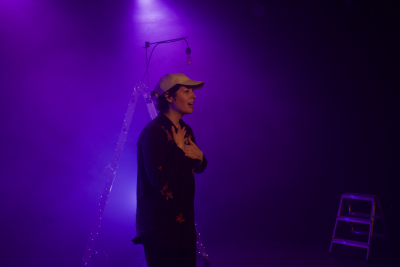
This year I’m continuing to develop Life as a Mesoplankton through development conversations and industry connections, while deepening my practice at Guildhall in collaborative operatic storytelling. Together, those processes are pushing me closer toward an authored screenwriting and musical storytelling practice.
I write plays, live interactive and immersive work, multidisciplinary projects, screenplays, and now opera, and it’s always important to me to explore how the particularity of each form carries the story.
Ultimately, I’m focused on characters and stories wherever they appear, the multiples of humanity, a kind of honesty, and resonance with an audience.
Guildhall places a strong emphasis on collaboration across disciplines. How has working with composers, performers and creatives from different backgrounds shaped your storytelling practice?
I’ve always been collaborative and responsive to process in my writing, and I find that flexibility and aliveness exciting. The liveness of storytelling should feel as open in development as it does in performance, especially in the bespoke nature of writing for specific humans, in the now. Working with a composer, it’s been interesting to weave the musicality of my writing – my approaches to rhythm, speech, and structure – with music, and to share opportunities for each other’s voices, to create something so cohesively of both of us.
Formally, opera is such a distinct thing, and I’ve felt very proud of the work we’ve made together.
I love writing for performers. It’s always a negotiation between people; no two collaborations are the same. Friction is a facet of life. For me it’s about finding a shared language, even when the same word holds different meanings, and locating overlaps in love – which thankfully hasn’t been hard in this process.
For prospective students considering the Opera Making course, what has been most valuable or surprising about the course for you so far?
I’ve taken a lot of pleasure in the language that music offers storytelling, its world-building, and what it can hold and express. It feels vital to have new stories in opera, and new ways of looking at the form – and I’ve found it very valuable to understand that opera doesn’t have to be one thing, with a fixed set of rules and expectations handed down from antiquity. Learning about musical form in an accessible way, and approaching it not from traditional training but from being open to feeling and grounded in commonality, has been very important.
Having the freedom, within creative constraints, to explore what something could be has also been immensely valuable. I’ve really valued the trust Julian Philips places in our intentions as artists. That trust – from others, and in yourself – is the most valuable thing.
How do you balance working across multiple forms, and what excites you most about what’s ahead?
Balance is always challenging. Life has tides and seasons. I think it’s a bit like homeostasis in the body, at a distance, balance appears to be a straight line, but when you zoom in, it’s full of curving fluctuations around a central point that you’re always near-missing and readjusting toward. For me, focus and flow are most important for balance between projects, which sometimes means putting something aside for a while so I can be fully deep in the thing in front of me, rather than skimming the surface of many things at once. But that’s not always possible.
I’m always rubbing up against the idea of how I should work as opposed to how I actually work best, and that’s part of the learning, across a lifetime, alongside projects being at different stages of development and so juggling different timelines. And there is a frictive feeding that comes from switching between pieces as well.
What excites me most about what’s ahead is the possibility of meeting and collaborating with lots of different artists and people. I want to be reaching more audiences, across more forms.
Finally, if you could offer one piece of advice to emerging writers or composers, what would it be?
There is no correct way to do something. The more you sharpen your instincts, test your intentions, and listen closely to your intuition – to what your body is telling you, teasing out and honouring the deeper truth that crawls out of your heart in the crepuscular between – the better your art will be. And that doesn’t come from external validation, though it can be nourished by external belief.

