In conversation with Missy Mazzoli ahead of the UK Premiere of Proving Up
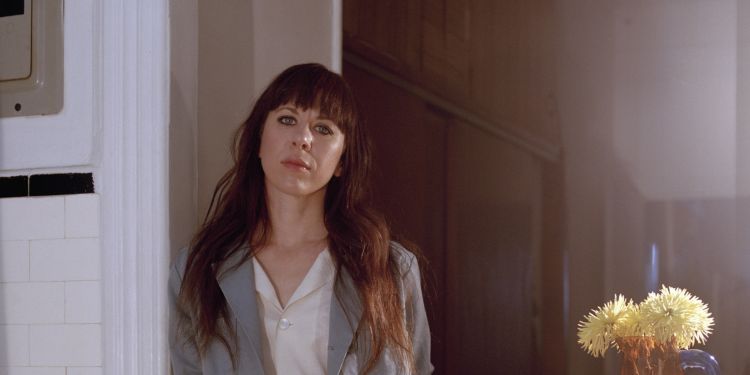
Missy Mazzoli talks all things Proving Up
This June sees the UK premiere of Missy Mazzoli's Proving Up at Milton Court Theatre. Ahead of the production opening we caught up with Missy to hear more about the inspiration behind the opera, the powerful symbols throughout and how the story resonates with audiences today.
This is the UK premiere Proving Up, how does it feel to be sharing this opera with a new audience in a new country?
While Proving Up is set in America and is preoccupied with the myths and realities of the American dream, its broader themes are more universal. This is a story about the immigrant experience; the sacrifice and hard work that sometimes extends beyond reason, hopes that are sometimes as fragile as glass, and the dark ways in which those hopes can be weaponised by those in power. I’m thrilled that this opera resonates outside of America, particularly in the UK, and I hope that it will lead to even deeper interpretations of the work.
Proving Up is inspired by Karen Russell’s short story. Could you tell us what originally drew you to this story and made you want to turn it into an opera?
Karen’s work is a fantastic blend of the real and surreal, a blend that I feel works well in a medium where everyone is singing their thoughts and stepping outside of the everyday world. She is also able to address issues that could be taken straight out of the news: the fragility of the American dream, the opioid crisis, environmental devastation, but she does this through surprising images and delightfully surreal scenarios that somehow get right to the heart of every issue.
The single glass window is such a powerful symbol throughout the piece. What does this represent and how is it reflected throughout the opera?
The window is not magical in and of itself, but it becomes the object into which this family puts all their hopes. At first it represents the ultimate bureaucracy, the final, almost random hoop this family must jump through to realise their dream of “proving up". As the opera progresses the window becomes a dark mirror of the family’s misdeeds, a pane of glass in which “sometimes we see things we don’t want to see”.
The story takes place in 1870s Nebraska. What themes from the opera feel most relevant to audiences today?
The family at the centre of Proving Up is living with a daily instability, this feeling that they are one mistake away from ruin. I think that feeling is very familiar to anyone who has tried to make a life in a new country, to anyone living without a social or financial safety net.
So much of history, is written by the “winners”, that slim margin of people who succeed, and I was interested in telling the story of people who did everything right, who sacrificed everything, who did what the government told them to do, and were still unable to make it. I started thinking about writing this opera during one of America’s many financial crises, when many people were losing their homes and their savings, so the plight of the Zegners felt very relevant to me.
The score includes suspended acoustic guitars and a chamber ensemble that create an intimate but uneasy sound. What inspired this instrumentation?
This opera is set in the midst of a severe drought, so I first tried to think of an instrumentation that would reflect dryness, and techniques that would make the sound feel like it was evaporating. The seven suspended acoustic guitars, the harpsichord and certain string techniques like col legno (playing with the wood of the bow to create a clicking or scraping sound) are meant to evoke a parched and inhospitable landscape.
Our production takes place in the intimacy of Milton Court Theatre. How does this intimacy change the way the opera might be experienced by audiences?
I love experiencing opera in an intimate venue; it’s like watching professional athletes up close. By design this is an opera that’s meant to be seen in a small venue, reflecting the claustrophobic and pressurised environment of the setting. I want the audience to feel that they are experiencing the action of the opera alongside the characters, as opposed to watching from a distance.
You’ve worked with young performers quite a lot throughout your career. What are you most looking forward to about seeing Proving Up interpreted by emerging artists?
When I wrote this opera I hoped that it was a work that could be done by students and emerging artists. It’s just as challenging as my other operas but on a smaller and more flexible scale. I also felt that, if I was going to write a work about the immigrant experience and the frailty of the American dream, it should be a work that could be easily performed on a variety of budgets, not just at opera houses. Over the last eight years this work has been performed in an old barn, a prairie museum, and even on an outdoor shooting range, as well as in black box theatres and opera houses.
Proving Up runs at Milton Court Theatre from 1-8 June, tickets available here.
UK premiere of Missy Mazzoli's Proving Up
Get tickets