
Day Seven
The Eight Days of Christmas highlights students and alumni whose education has been supported by a scholarship. From now until noon on 9 December, the Big Give is doubling every online donation until we reach our goal.
Your generosity creates next year’s scholarships, inspiring the new stories that come with them.
Day Seven
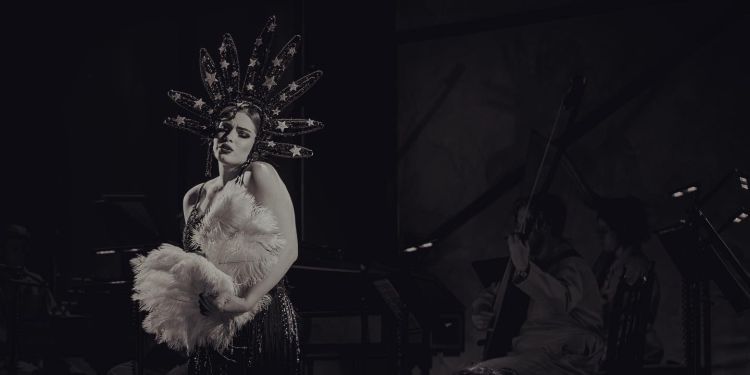
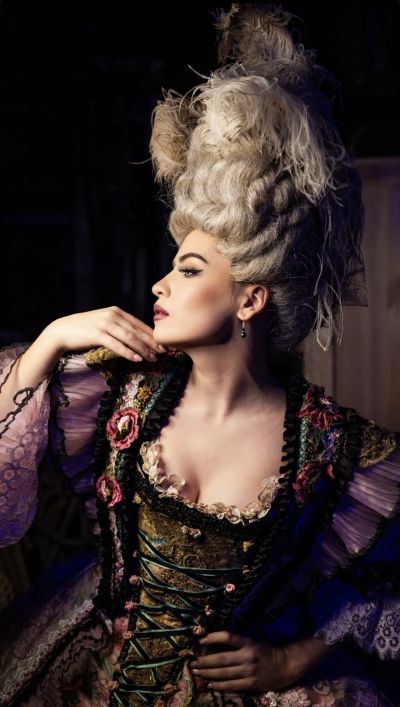
After graduating from Guildhall’s Opera Studies department in 2023, Inguna Morozova stepped into the iconic production of The Phantom of the Opera on London’s West End. In this interview, Inguna talks about her time at Guildhall School and her career in musical theatre.
What drew you to studying at Guildhall School?
Opera has always been my calling. From a very young age, I dedicated myself to training in classical singing, ballroom dancing and theatre, before making the move to the UK to seriously pursue my career.
Guildhall was an obvious choice.
With its world-class reputation, internationally renowned vocal programme and a long list of successful alumni, it stood out. I was particularly drawn to their focus on dramatic training – something I was just as passionate about as the singing itself. Opera provided the perfect stage to merge my love for singing and theatre. This is truly where my professional journey began.
What did having a scholarship mean to you?
During my MMus in Opera Studies at Guildhall School, I had the privilege of being a recipient of the Gita de la Fuente Prize. Having a scholarship that generously covered all my tuition fees was transformative; it enabled me to dedicate my full focus to immersing myself in the rigorous, intense training in the Opera Studies department.
The demands of the programme were significant – I remember countless hours spent on detailed historical research, meticulous translation of texts from Italian, French and German, and the intensive process of learning and memorising complex operatic roles. When studying an art form that requires such precision and attention to detail, this undivided focus is crucial for maximising student success and truly getting the best from the training.
For me personally, the scholarship was also an important achievement in itself – a meaningful signal that I was on the right path.
Tell us a bit more about your career since graduating.
The journey since graduating has been quite exciting. My first professional contract took me to Glyndebourne, where I worked for two years across both the festival and autumn seasons. During my time there, I made my solo debut performing ‘Vilja’s Lied’ from The Merry Widow with the Glyndebourne Sinfonia as part of the Festival’s Christmas Concerts series. My engagements also included playing Sister Catherine in Dialogues des Carmélites, covering Sylviana in The Merry Widow, singing at the BBC Proms and participating in nine different operatic productions. Working alongside world renowned directors, conductors and singers in such a dynamic environment provided invaluable experience. I feel very fortunate for the opportunity I had there and hope to return one day.
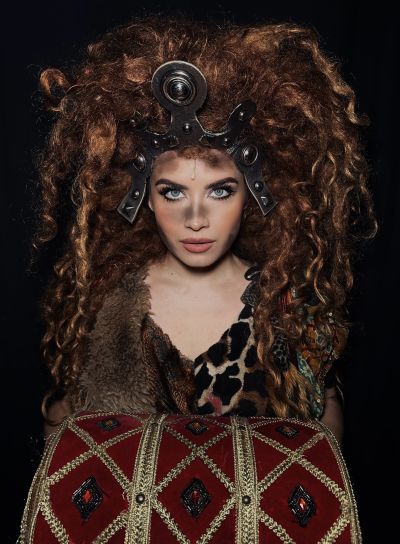
Now I am at The Phantom of the Opera, performing the role of a Wild Woman and covering Carlotta Guidicelli at His Majesty’s Theatre on the West End.
What was the audition process like for The Phantom of the Opera, and how were the rehearsals?
The audition process for the West End differs significantly from opera; it is a much longer, multistage process involving several vocal recalls and a dedicated dance call, ultimately spanning several months from start to finish. Each week presented a new challenge, requiring me to quickly learn new material from the show and master the choreography from one of its most iconic scenes. Honestly, it was a thrilling experience – every stage felt like an exciting new milestone to look forward to.
The rehearsal process itself is incredibly fast-paced, demanding extreme focus and precision in learning. A long-running production like Phantom requires impeccable attention to detail; every aspect must be top-form at all times – the singing, choreography, acting, wigs and costumes. We have a fantastic team here that ensures every show runs seamlessly night after night and I am loving every minute of it.
You have some amazing costumes in the show, is there an item in particular that you especially love or feel connected to?
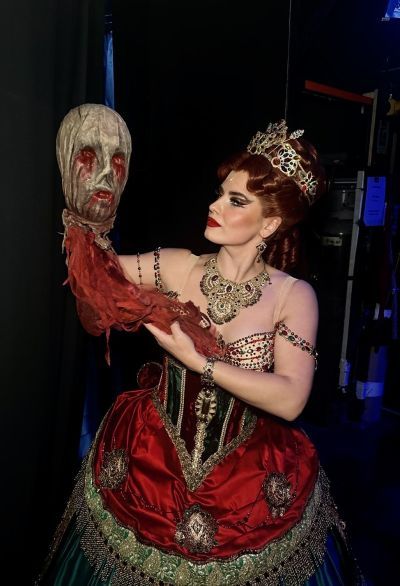
I have a definite soft spot for the iconic severed head prop featured in the stage production of Hannibal – the one Carlotta dramatically presents at the beginning of the show. As both a Wild Woman and a cover for the character Carlotta, I interact with this piece daily. It’s far more than a simple prop; it’s a compelling narrative device – a victory trophy presented by Hannibal upon his triumphant return from defending the city against Roman forces. It is a striking yet essential element that absolutely nails the dramatic tone.
Do you have a favourite vocal warm-up or backstage ritual before going on?
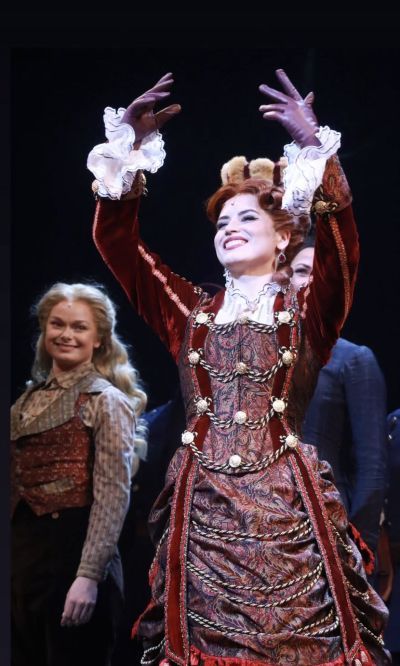
Absolutely! Before every curtain goes up, the cast runs through an essential on-stage vocal and physical warm-up. We perform a busy eight shows a week, every single week. With our show being so heavily choreographed, full of dancing and featuring incredibly high soprano parts, warming up properly isn't just nice to have – it’s totally necessary. It keeps us delivering top-tier performances consistently and, crucially, prevents injuries!
On the days I'm on as Carlotta, you’ll find me arriving to the theatre well ahead of time to give my voice the proper attention it needs. The role itself is a vocal marathon, packed with demanding coloratura runs and high notes that have to be perfectly executed, every time.
I like to warm up my voice by singing my favourite opera arias. Right now, I’m loving a bit of Mimì to find that beautiful vocal line, Gilda for the high notes and runs, and a sprinkle of Norina/Musetta to bring out the perfect amount of prima donna attitude!
Double your donation now
Donate here between 2 – 9 Dec
Return to Eight Days of Christmas