
Platform / Discussion |
Research |
ResearchWorks
Guildhall offers some of the most stimulating and creative training for composers available in the UK. Our guiding principle is that composers should develop in collaboration with technically-proficient, sympathetic instrumentalists under the expert guidance of experienced practitioners.
Individual Lessons and Masterclasses | Workshops | Techniques of Composition | Orchestration | Electronic Music | Analysis | Aesthetics
Guildhall offers some of the most stimulating and creative training for composers available in the UK. Our guiding principle is that composers should develop in collaboration with technically-proficient, sympathetic instrumentalists under the expert guidance of experienced practitioners. Our commitment to developing your unique voice as a composer means that we will workshop every composition that you write.
By studying at Guildhall, you will benefit from a range of unique opportunities. These include access to performers, an outstanding faculty of professional composers distinguished in a wide-ranging field of compositional activity, specialism and artistic approach, and a host of external partners. You will be based in a lively arts complex, and our focus on innovation and collaboration will help you take full advantage of Guildhall’s multidisciplinary environment, working within a constant cross-departmental flow of ideas, skills and creativity.
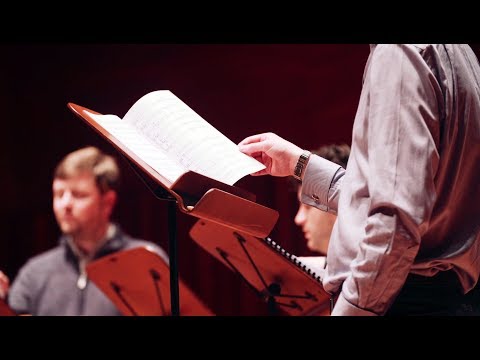
Find out more about Composition training at Guildhall from our students and staff in the video below.
Liam Donegan, Composition Department Manager
composition@gsmd.ac.uk
The undergraduate composition pathway is intended to support your creative development as a composer, whatever your interests or sources of inspiration. There is no ‘house style’; we are not looking for one kind of composer. Consequently, our community of student composers is very diverse, but with a shared sense of commitment, purpose and mutual respect.
The programme is built on two complementary strands of academic activity: Original Composition and Technical Tools. Original Composition activity follows a four-year trajectory that builds from small-scale chamber projects in Year 1 (monody, duo, percussion), through the more ambitious demands of working with small ensemble, string quartet and 15-piece ensemble. The programme culminates in Year 4 with works for full orchestra, vocal ensemble and live sounds and electronics. All compositions are workshopped either by your fellow students in the school or by professional, world-renowned visiting ensembles and soloists.
The Technical Tool strand is intended to equip you with a high level of skill and expertise in the craft and technique of musical composition. In the first two years, topics range from harmony and counterpoint to pastiche composition; 20th Century materials explores core concepts in 20th and 21st century harmonic and rhythmic practice and provides practical experience of working with percussion. In addition, Creative Ensemble will challenge you to collaborate in a performing ensemble, offering a chance to engage with ideas and possibilities of experimental, and often transmedial, practice. Topics in Years 3 and 4 range more widely and include aesthetics, workshop skills and orchestration. In all four years of Technical Tools, you will also take classes in electronic music and analysis.
At the heart of the programme is the workshop process. We make a commitment to workshop every piece that you write, from your first exercises for one or two instruments, to full ensemble and orchestral pieces in your third and fourth year. This programme thrives on close partnerships with other Guildhall School departments, and all undergraduate composers are encouraged to develop their skills and experience by working collaboratively as creative artists.
Read more about the broader BMus programme structure.
Read more about our postgraduate specialism in Composition.
Read more about the new MA in Opera Making and Writing, in association with the Royal Opera House.
Read more about our Doctoral research programmes.
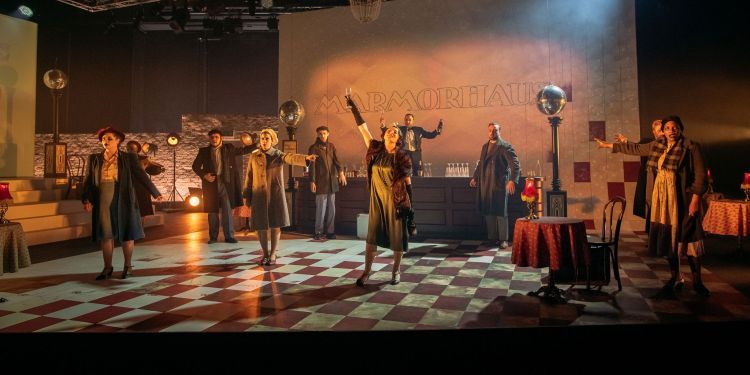
Owing to the School’s location within an international arts venue, distinguished visiting composers pass through our doors regularly, giving masterclasses, seminars and individual lessons to our students. The department enjoys close working relationships with a number of external partners including the Royal Philharmonic Society, Royal Opera House, London Contemporary Dance School and the Wigmore Hall, organisations such as Sound and Music, new music ensembles such as Exaudi or Chroma, orchestras such as the BBC Symphony, London Symphony or Aurora orchestras, and festivals such as Spitalfields Festival.
In 2015, Na’ama Zisser was appointed as Philip Venables’ successor as Guildhall School/Royal Opera House Composer-in-Residence. Her new opera, Mamzer Bastard, exploring the relationship between Jewish Kantorial singing and traditional operatic singing, was staged by the Royal Opera House at Hackney Empire in June 2018.
Philip Venables’ new operatic version of Sarah Kane’s 4.48 Psychosis received its world premiere at the Lyric Hammersmith in May 2016, in a new production staged by the Royal Opera House, and went on to win the UK Theatre Award for Achievement in Opera, the Royal Philharmonic Society Award for Large-Scale Composition, and a British Composer Award. Venables’ latest work, The Gender Agenda, premiered at the re-opening of the Queen Elizabeth Hall, before performances across Europe.
In recent years, Guildhall School graduate composers featured in this scheme have included Gonçalo Gato, James Hoyle, Daniel Kidane, Jack Sheen, Donghoon Shin, Michael Taplin and Alex Tay.
Oliver Leith has had works performed by the Philharmonia Orchestra, the Orchestra of Opera North, and London Sinfonietta. He is a participant in Sound and Music’s Next Wave scheme and a member of the LSO Soundhub scheme. In 2014 he was awarded a Royal Philharmonic Society Composition Prize, and in 2016 won a British Composer Award.
Raymond Yiu’s work includes The London Citizen Exceedingly Injured, written for the BBC Symphony Orchestra, and The World Was Once All Miracle, which was premiered by Roderick Williams, the BBC Symphony Orchestra and Sir Andrew Davis in 2018. His piece Symphony was premiered by the BBC Symphony Orchestra at the 2015 BBC Proms season. Northwest Wind, written for and premiered by Lontano, won a British Composer Award in 2010.
Edmund Finnis has enjoyed particularly close associations with the London Sinfonietta, who have variously performed, toured and recorded six of his works, and the London Contemporary Orchestra, with whom he was Composer-in-Association from 2013 to 2016. In 2017, his orchestral work The Air, Turning received its premiere by the BBC National Orchestra of Scotland, conducted by Ilan Volkov. Finnis received a Paul Hamlyn Foundation Award for Artists in 2012, and was Composer-in-Residence at the 2013 Chelsea Music Festival in New York City.
Mark Simpson is Composer in Association of the BBC Philharmonic. His oratorio The Immortal was premiered by the BBC Philharmonic at the 2015 Manchester International Festival to immediate critical acclaim. Other works with orchestra include Israfel, premiered by the BBC Scottish Symphony Orchestra, sparks commissioned for the 2012 Last Night of the Proms and A mirror-fragment… written for the Royal Liverpool Philharmonic Orchestra. His first opera Pleasure was commissioned by Opera North, the Royal Opera and Aldeburgh Music and premiered in 2016. His music is published by Boosey & Hawkes.
Francisco Coll made his BBC Proms debut in 2016 with Four Iberian Miniatures for violin and chamber orchestra by Augustin Hadelich and the Britten Sinfonia under Thomas Adès. The same year saw the premiere of Mural by the Orchestre Philharmonique Luxembourg under Gustavo Gimeno, and a new Harpsichord Concerto for Mahan Esfahani and Britten Sinfonia. Coll’s opera Café Kafka received its London premiere at the Royal Opera House in 2014. His music is published by Faber Music.
Matthew Kaner was BBC Radio 3’s Embedded Composer in 3 during their 70th anniversary season in 2016; his residency involved the writing of over ten new works, which were premiered on air throughout the period. His orchestral work Encounters was premiered at the Lucerne Festival in 2017 with Jeffrey Means and the Festival Academy Orchestra. Matthew was the recipient of a Roche Young Commission from 2015-17, and won the Royal Philharmonic Society Composition Prize in 2013. He is a professor of composition at Guildhall School.
Selected by the BBC as one of the most inspiring 100 Women of Today, Bushra has written various works for the concert hall, dance, theatre and multi-media, performed and broadcast on radio and television worldwide. Her pieces have been performed by ensembles including the London Symphony Orchestra, BBC Symphony Orchestra, BBC Scottish Symphony Orchestra, Royal Opera House, London Sinfonietta, Birmingham Contemporary Music Group, Manchester Camerata, and more. Her music is published by Composers Edition.
Christina Athinodorou’s work has been featured in festivals worldwide, including the Biennale di Venezia, Grafenegg Festival, MITO SettembreMusica, ISCM World New Music Days-Wien Modern, Salle Pleyel, Onassis Cultural Center, Music Biennale Zagreb, Festival d’Aix-en-Provence, deFilharmonie Chamber Series. She won the Prix de Jury and the Coup de Coeur du Publique in the composition competition Île de Créations in 2013 for her orchestral work, Interméde pour une mer jamais vue, which is published by Éditions Durand.
You will find a summary of the programme on this website, and a more detailed outline is also available. Please contact the Composition Department Manager (composition@gsmd.ac.uk) if you would like a copy.
Alternatively, come to our Open Day, when the content of the programme will be explained, and you will have the opportunity to ask questions.
We start from the position that composers need not only creative flair and imagination, but also solid technique, and whilst the former has to be nurtured and encouraged, the latter needs to be acquired in a variety of different ways. These include composing using the techniques of various composers of the past, from the Renaissance to the late twentieth century, including post-tonal and electronic music techniques.
However, think of this as being equivalent to the technical exercises (scales, arpeggios, ‘difficult passages’ and studies) that your instrumentalist colleagues have to master: an essential part of developing technique, but not an end in themselves. The most important part of your programme (and the part that carries the most weight in your final mark) is the portfolio of original pieces you will write, and the Techniques of Composition elements are there simply to help you write these with greater fluency and confidence.
It is important to note that our programme is not primarily a commercial music programme, although the skills and techniques learned would be of enormous benefit to anyone who later decides to work in a more commercial context, as they are not style-specific, and can be applied to many different genres and professional situations.
A useful analogy is to think of the difference for visual artists between choosing a Fine Art course and a Commercial Art or Graphic/Communication Design course. As with a Fine Art course, we begin from the assumption that our students want to develop an original voice, and think of their music as an ‘art object’ rather than something that only works in tandem with a visual or dramatic element.
That being said, if you are interested you may wish to look at the Film Music principal study within the Electronic Music Department.
The simple answer is that they are two distinct programmes, and candidates who think they might be better suited to principal studies in the Electronic & Produced Music department should consult this website or the prospectus, and if necessary make enquiries to the Head of Electronic & Produced Music.
Because the creative use of technology is so vital to composers working today, Principal Study Composers receive an hour per week tuition on Electronic Music Technique throughout their programme with specialist teaching staff, and are expected to produce a substantial piece of work in Year 4, in addition to smaller exercises in Years 1-3.
Additionally, there is an Electronic Music Elective available that focuses on more commercial applications, and for students who are exceptionally advanced in this area, it is also possible to take Electronic Music as a Second Study.
The Head of Jazz is happy to discuss the programme with potential applicants who may be unsure of whether the Jazz Composition programme is appropriate for them.
No, the programme is a full time programme.
Many of our professors and graduates undertake private teaching. Please contact the departmental administrator to be put in touch with them. Alternatively, the ISM and Musicians Union keep lists of members who teach in your area, and your local County Music Service may also have suitable people on its staff. UK students of school age should consider auditioning for places at either Junior Guildhall, or at one of the other conservatoire Junior Departments which teach composition.
Essentially, we are looking for composers who have: a passionate urge to create music; an awareness of the music of the past and a keen interest in the music of their time (of all kinds); a sense of the value of music as an independent art form; a strong desire to develop an individual voice; and the drive to acquire relevant skills to accomplish this.
It is worth noting at this point that because our course is a specialist programme for Principal Study composers, and not a general music degree, we expect that in addition to genuine creative imagination and a burning desire to compose (demonstrated by the portfolio of scores you will submit - see below - and at interview), candidates will already have a secure knowledge of music theory and good aural skills, or at least be able to demonstrate the aptitude to develop these.
The first year of our course assumes basic knowledge of tonal harmony in the Western classical tradition as covered in Grade 6 Theory, and developed further in Grades 7 and 8.
Some facility at the keyboard is also highly desirable, although this will not be tested at audition; if you are not a strong keyboard player, there are opportunities to develop this during the first two years of the course. Many of our students also have some fluency with the principal music technology software programs (Sibelius, Logic, Pro Tools, and even Max-MSP) before beginning our course, but similarly, this is not an entry requirement, and there are opportunities to learn these from scratch.
You will be required to upload three contrasting compositions in the Supporting Information section of the online application form. Scores should be provided in PDF format (Sibelius/Finale files are not accepted). Where possible, recordings of the scores submitted should also be included as online links on the score or as a separate document (any freely accessible online service is acceptable). These compositions need not be in the same style or for the same forces, and might have been written for specific projects. The aim should be – as in an instrumental audition – to give the audition panel a sense of what you can do, on both a creative and technical level.
Also, please note that applicants for Composition are required to submit two confidential references with their application in advance of your audition. Of the two references, one might be a more general academic reference (say from your Headteacher or Head of Sixth Form), and the other should be from the teacher who currently teaches you composition.
Obviously, recordings of real instrumental performances are much preferred, but we do appreciate that this is not always possible, and so we do accept MIDI/Sibelius recordings. However, as a general point of advice, try to write for good instrumentalists or singers that you know, and work with them closely to achieve good performances – this is not only excellent preparation for our course, it’s also good preparation for the profession.
Candidate will either be invited to interview or sent an unsuccessful outcome. For BMus candidates selected for interview, we will send an entrance exam which is due for completion before attending the interview. The test is completed in your own time. Full details about the exam will be provided if you are selected.
If you are selected for interview you will be sent an entrance exam to complete and you will have a week to complete the task. The exam will focus on Techniques of Composition (harmony and counterpoint) and will be at around Grade 6 Theory standard. The written exam is not something that you pass or fail – its purpose is diagnostic: in other words, we want to find out what you have learned already, and what kind of tutorial support might suit you best were we to offer you a place.
It is not necessary for purely electronic pieces to be accompanied by scores, although short textual commentaries on the structure and techniques used are always helpful. However, pieces that include electronics with live instruments should be accompanied by a score, unless the instrumental material is completely improvised.
Please refer to the individual programme pages for the deadline for applications for the current round.
Yes – we are always happy to meet with potential students for either a formal consultation lesson, or to answer questions more informally.
Please contact the Composition Department Manager (composition@gsmd.ac.uk) to make an appointment. There is also a departmental Open Day, usually held in February, which is an excellent opportunity to observe the Department in action, and to ask questions of the Head of Department, and other Professors who may be teaching that day.
The interview (about 20-25 minutes) will be with a panel of two or three professors, and will focus on your submitted scores. You can expect to be asked detailed questions about these, as well as your musical interests and enthusiasms. In many ways, the interview is designed to simulate what a composition lesson or masterclass is like. We will not ask trick questions, or try to trip you up: the aim is to find out as much about you, your music, and your creative impulses and interests as possible in the limited time available. We ask all candidates the same basic questions and make our assessment based on their responses.
The department has funds available for scholarships for exceptional students both from the UK and internationally, and these range from full fees to various proportions of fees. Students who are offered a place on the course are invited to apply for scholarship funding once we have received confirmtion that you are accepting the place.
Undergraduate students from England or the EU (but not Wales, Scotland or Northern Ireland) may also be eligible for a National Scholarship if their family income is below £25,000 (details will be sent out with your offer letter).
If you are interested in undertaking short-term study at Guildhall School, we would recommend the Short Term Music Programme (applications close on 31 March for September entry). If you are looking for a more informal way to study, we also offer a range of short courses (currently online only, running throughout the year).
Following the UK’s departure from the EU on 31 December 2020, Guildhall School will not be participating in the Erasmus scheme. The School will use this time instead to explore partnerships with institutions across the world. Find out more on our Study Abroad page.


